
Are Self-Driving Cars Really Safe?
In America, on the same day, thousands of drivers fill highways, thinking they control their situation. We hold the wheel, look in the mirror,and trust our instincts. And yet annually tens of thousands of people die in traffic crashes, most of them because of everyday human folly — distraction, fatigue, impatience, misjudgment. Into this uneasy reality steps the prospect of self-driving cars, a technology that compels us to engage in something psychologically hard: to yield control for the sake of safety with self driving cars. The question isn’t whether the idea feels disquieting. The issue is, does the data support this?
The Size of the Issue We Now Accept
More than 40,000 people die annually in U.S. traffic collisions, with human error accounting for the overwhelming majority of crashes. We seldom describe this as a public health crisis, although the figures compare with other preventable causes of death that command far more policy attention. Driving is one of the daily activities where one short-lived distraction could have a devastating effect on several people’s lives. A glance at a phone. A moment of road rage. A miscalculation in rain. Humans are imperfect, and driving requires a nearly perfect performance for a long period of time. The scary thing is that we have normalized the risk. Car crashes are like the cosmic version of accidents — tragic, but inevitable. But if a new technology proves it can reduce serious injuries and deaths, then it’s harder to oppose it if you don’t have evidence in support.
What the Data Actually Shows
The best arguments for self-driving cars do not happen in a realm of futuristic speculative thinking but in the real world. A few autonomous vehicle companies have indeed registered tens of millions of miles that have been completely driven on public highways. In some published safety studies, systems that had fully autonomous functions reported significantly fewer injury-induced crashes than human drivers operating under similar conditions. A large-scale dataset published by a reputable operator of self-driving vehicles has consistently demonstrated much lower rates of serious-injury and fatal collisions compared to human baselines on similar roads. These results suggest that, at least with certain operating conditions in place, functional self-driving systems can succeed higher than human drivers in preventing the worst outcomes. That does not mean the technology is perfect. It means that the comparison is not perfection versus imperfection, but rather machine performance versus the fundamentally flawed human norm.
What the Data Actually Shows
The best arguments for self-driving cars do not happen in a realm of futuristic speculative thinking but in the real world. A few autonomous vehicle companies have indeed registered tens of millions of miles that have been completely driven on public highways. In some published safety studies, systems that had fully autonomous functions reported significantly fewer injury-induced crashes than human drivers operating under similar conditions. A large-scale dataset published by a reputable operator of self-driving vehicles has consistently demonstrated much lower rates of serious-injury and fatal collisions compared to human baselines on similar roads. These results suggest that, at least with certain operating conditions in place, functional self-driving systems can succeed higher than human drivers in preventing the worst outcomes. That does not mean the technology is perfect. It means that the comparison is not perfection versus imperfection, but rather machine performance versus the fundamentally flawed human norm.
| Total U.S. traffic fatalities | 40,901 people died in motor vehicle crashes in 2023 |
| Alcohol-impaired driving fatalities | 12,429 people killed in alcohol-impaired crashes in 2023 |
| Percentage of all traffic deaths involving drunk driving | 30% of all traffic crash fatalities |
| Daily average deaths in DUI crashes | 37 deaths per day in drunk-driving crashes |
| Alcohol-impaired fatalities as share of total traffic deaths | 32% of all U.S. traffic deaths in 2022 |
Source: National Highway Traffic Safety Administration, Centers for Disease Control
Why People Don’t Trust Technology
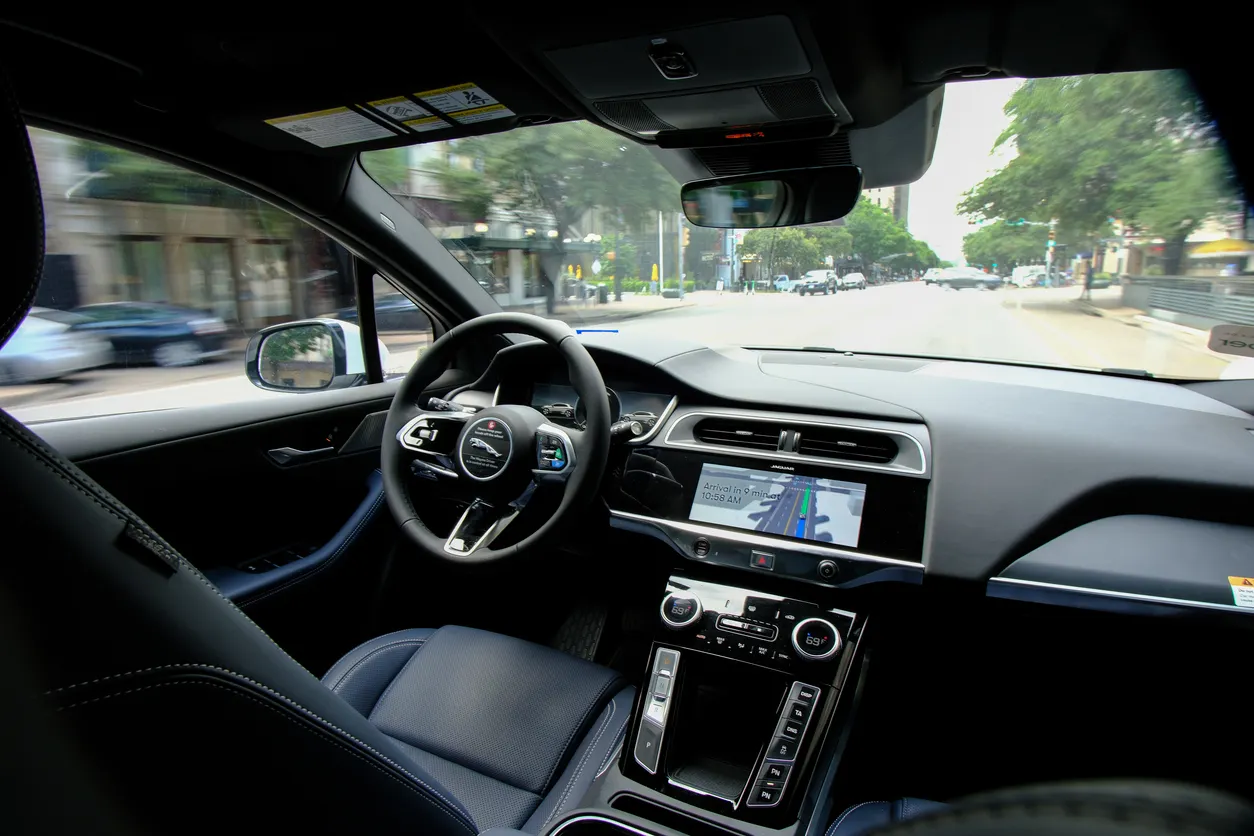
But the public skepticism continues to be so strong despite some promising safety data. That resistance is emotional and intuitive. When a human driver crashes, we witness a tragedy, yet a familiar failure. And when a machine causes one, it feels unnatural — even if statistically they are relatively rarer. And there is visibility, there’s the problem. Human drivers make mistakes repeatedly, and most do not end in crashes. Autonomous vehicle crashes, while scarce, tend to garner intense media attention. A single failure can take over headlines for weeks at a stretch of time, and generate headlines more powerfully than millions of uneventful miles. You don’t just build trust based on statistics. It is built on transparency. Firms that are developing autonomous systems will have to publish detailed, independently verifiable safety information. The public will remain uncertain without unified reporting standards throughout the industry.
The Distinction Between Total Autonomy And Driver Assistance
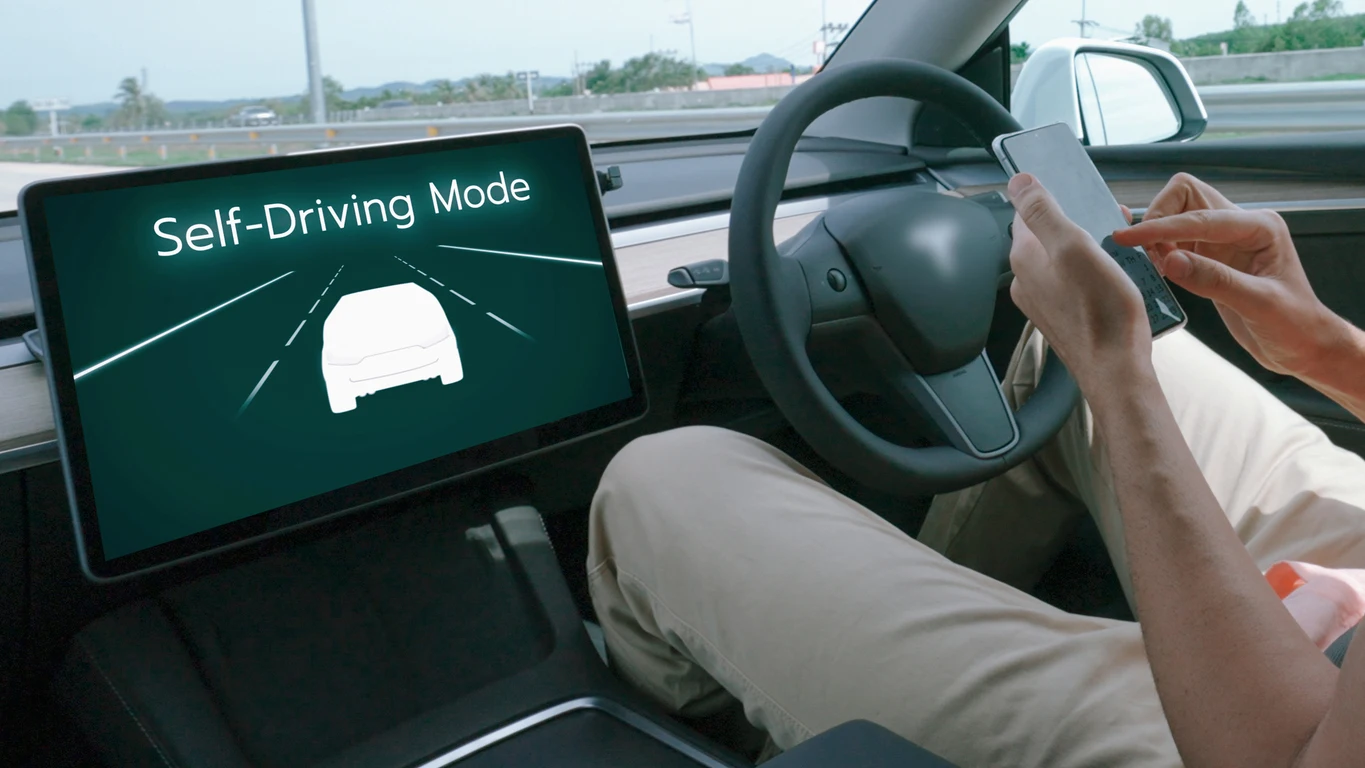
The true difference between fully driverless and partially automated driver-assisted systems is worth noting. Many roads today are equipped with lane-keeping assistance, adaptive cruise control or supervised “autopilot” modes, for example. Such systems still need constant human attention. But studies also have discovered that partial automation can lead to dangerous psychological traps. When drivers think that the car is doing more than it actually is, they can mentally distance themselves from the car while still being legally responsible. Conversely, fully autonomous systems, as they are called, can accomplish the complete driving task on their own within certain operational conditions. The amalgamation of all automation obscures important distinctions regarding safety. There should be a strict debate about self-driving cars: Are we talking about supervised assistance or actual driverless operations?
The Legal and Ethical Issues
These difficult questions remain even in case autonomous vehicles can be statistically safer. Responsibility is typically quite simple when a human driver drives and crashes. While liability is distributed between manufacturers, software developers, fleet operators or insurers, liability in a self-driving vehicle may be shared in various ways. There are also edge cases — infrequent instances when harm might be inevitable. What is the appropriate way to program an autonomous system with a response?
- Should it prioritize passenger safety?
- Should it try to reduce maximum harm, no matter who’s harmed?
These dilemmas are not novel; human drivers make moment-by-moment moral calculations daily. The only difference is that with autonomous vehicles, those decisions are pre-programmed and scalable. That requires regulatory clarity and ethical oversight.
Safety Beyond Just the Rates of Collision
The discussion about safety must also take into account wider systemic consequences. Autonomous vehicles never drive under the influence of alcohol. They do not text. They do not have road rage, or fatigue. They keep the reaction times constant and have 360-degree sensor capability. If used broadly and mindfully, self-driving cars could save lives with less emergency room trauma, reduce insurance expenses, and revolutionize urban design. Lower crash rates could enable our cities to reconsider road infrastructure, pedestrian areas and parking demand. But the benefits are not guaranteed. Bad implementation, a patchy roll-out, or inadequate regulations could erode any upside from the proposed system. Safety hinges not just on technology, but on governance.
So What Would Convincing Proof Look Like?
The burden of proof is still heavy for many skeptics. And perhaps it should be. The technology has a direct impact on public safety, and it’s warranted to be cautious. Proving it will probably involve standard national reporting of autonomous miles driven, definitions for crash severity, third-party audits and clear comparisons with human driver baselines. It would also encompass long-term data from different weather, geographic and traffic conditions. Most importantly, the question is not whether autonomous vehicles get away with all crashes. It is whether they can meaningfully reduce serious injuries and fatalities when compared to human drivers.
Conclusion
The honest answer is nuanced. Currently, evidence suggests that in some controlled situations, fully autonomous vehicles can reduce serious crashes greatly. On the other hand, public trust is fragile, regulatory frameworks are still developing and not all automated systems are equally safe. The true comparison is not between a human driver who drives the self-driving car. It is between self-driving systems and the distracted, weary, emotional and imperfect drivers who have run our roads. If autonomous vehicles can objectively save thousands of people each year — if companies and regulators can commit to transparency and accountability — then opposing them out of instinct may be costly in itself. Ultimately, safety has nothing to do with comfort. It is about outcomes. And the outcomes are what we need to keep measuring, scrutinizing and improving.
Share this Post
Categories
Archives
- March 2026
- February 2026
- January 2026
- December 2021
- August 2021
- June 2020
- April 2020
- March 2020
- August 2019
- July 2019
- June 2019
- May 2019
- April 2019
- January 2019
- November 2018
- October 2018
- September 2018
- August 2018
- July 2018
- June 2018
- May 2018
- April 2018
- March 2018
- February 2018
- January 2018
- November 2017
- October 2017
- September 2017
- August 2017
- July 2017
- June 2017
- May 2017
- April 2017
- March 2017
- February 2017
- January 2017
- December 2016
- November 2016
- October 2016
- September 2016
- August 2016
- July 2016
- June 2016
- May 2016
- April 2016
- March 2016
- November 2015
- February 2014
- January 2014
- December 2013
- November 2013
- October 2013
- September 2013
